Image APIs,
under control.
Implementation guides for the contracts, trust boundaries, transformation recipes, browser delivery, and operational evidence behind production image systems.
-
Use Content Negotiation in an Image API
Use content negotiation for representation choices the cache can vary safely, and explicit URLs for choices that must be durable and inspectable.
-
Design Stable Public IDs for Image Assets
A public ID should remain stable across filename changes while avoiding sensitive data and tenant collisions.
-
Model Originals, Variants, and Renditions
Model originals, variants, and renditions separately so replacement, rollback, cache invalidation, and audit history remain explainable.
-
Choose Synchronous or Asynchronous Image Processing
Choose synchronous processing only when work is bounded enough to finish within the caller’s latency and retry budget.
-
Design Resource Names for Images and Derivatives
Resource names should identify durable assets and operations without embedding mutable presentation details.
-
Anatomy of an Image API Request
An image API request combines identity, authorization, operation intent, representation preferences, and retry context.
-
REST Image APIs vs SDKs: Choose the Right Integration Boundary
Use the REST contract as the source of truth and an SDK as a convenience layer for signing, streaming, and typed responses.
-
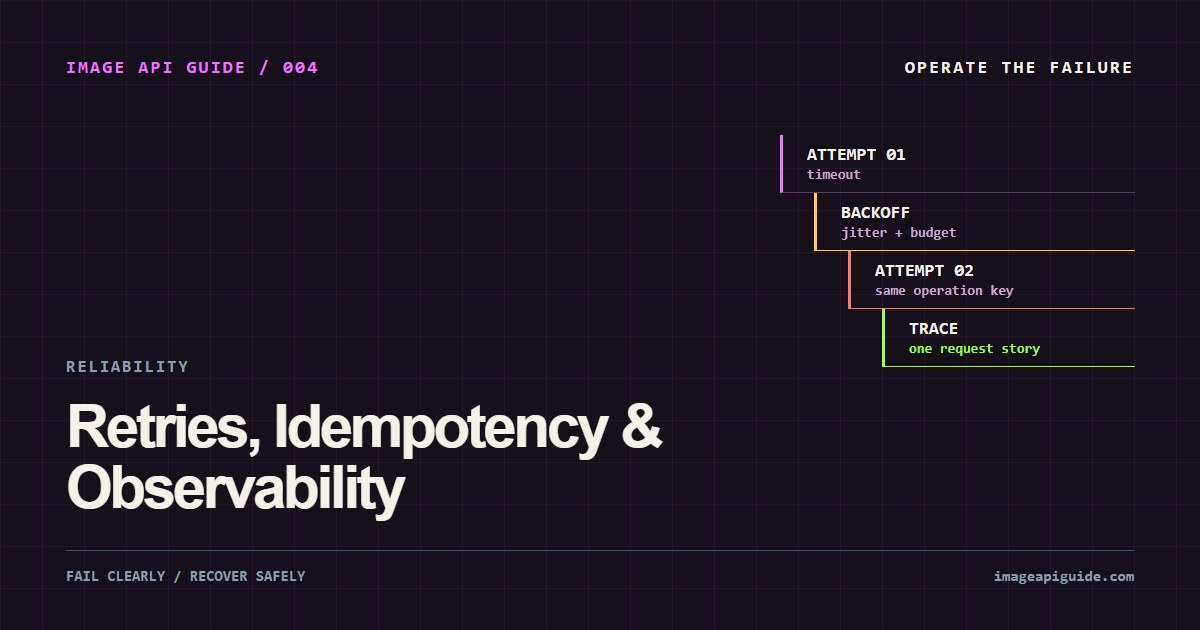
Image API Error Handling: Retries, Idempotency, and Observability
Reliable image API clients classify failures, retry only recoverable operations, make ambiguous writes idempotent, and trace one logical operation across attempts.
-
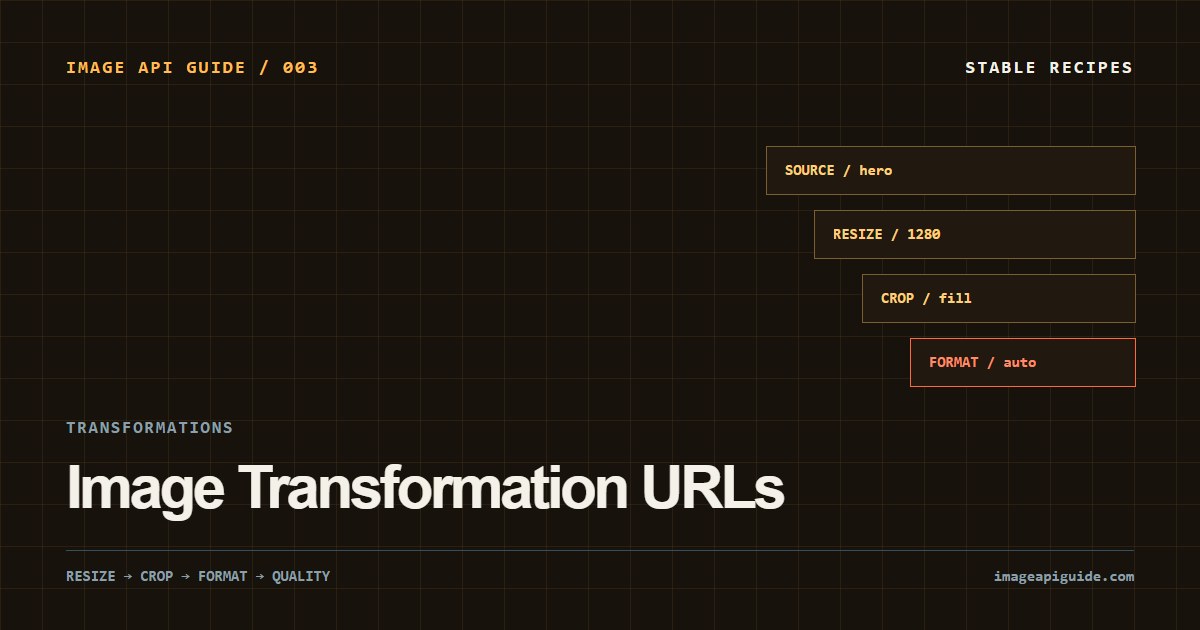
Image Transformation URLs: Resize, Crop, Format, and Quality
A transformation URL is a cacheable recipe: it identifies the source image, ordered operations, output policy, and version needed to produce a derivative.
-
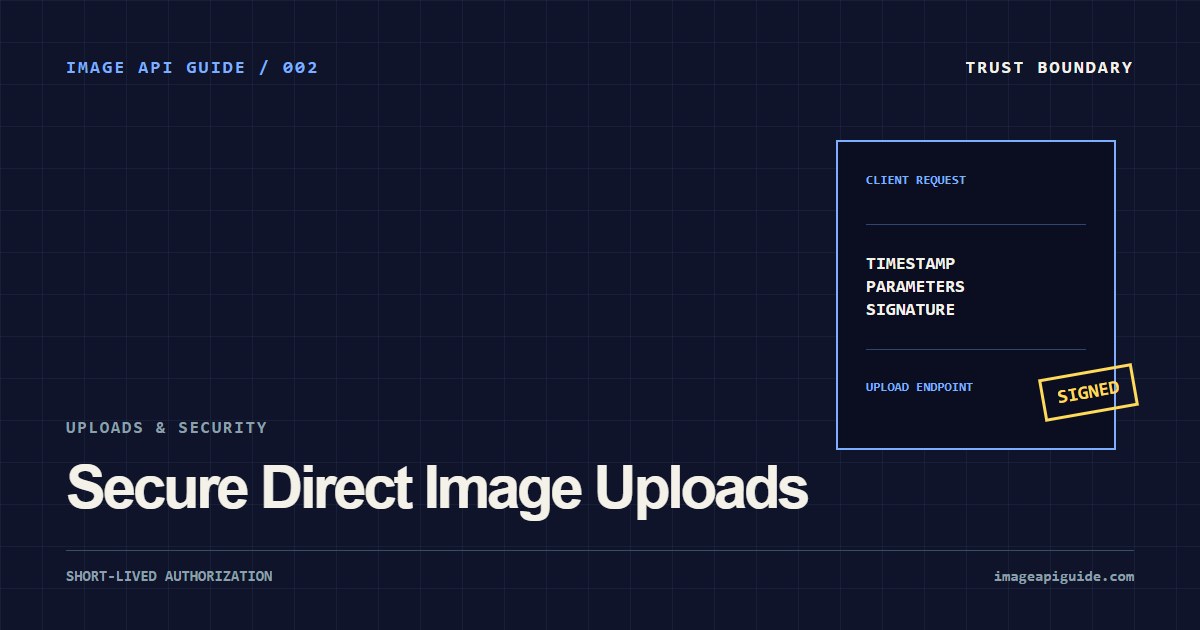
Secure Direct Image Uploads with Signed Requests
A secure direct upload keeps image bytes off your application server while keeping authorization, allowed parameters, and long-lived secrets under server control.
-
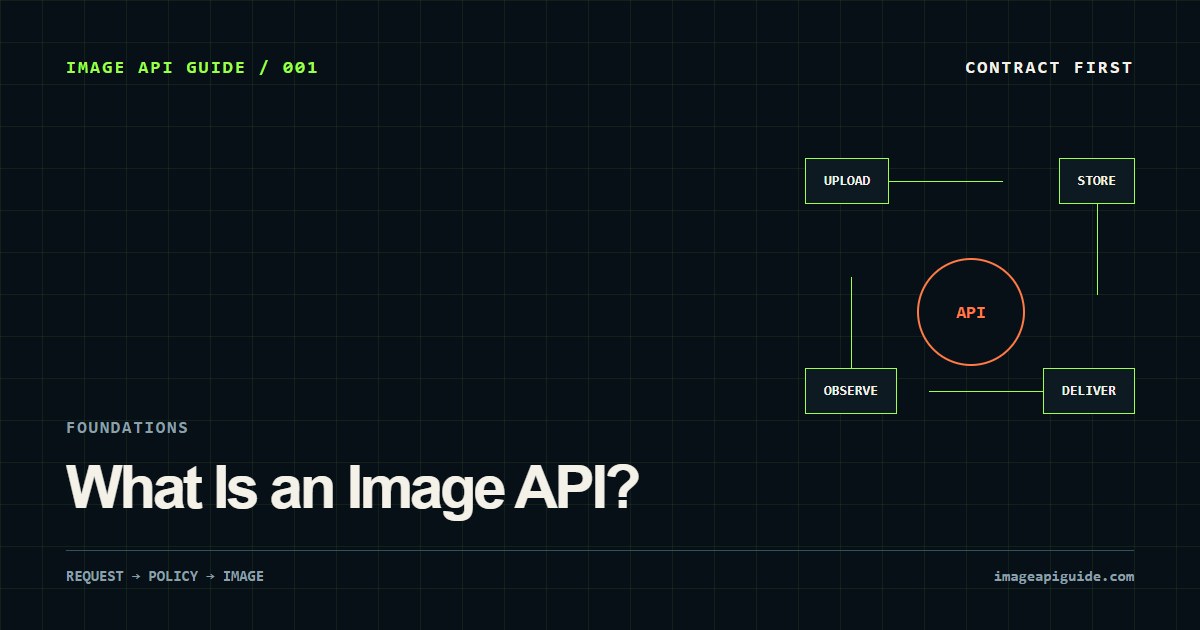
What Is an Image API? A Practical Guide
An image API is a programmable contract for accepting, managing, transforming, and delivering images without coupling every application to image-processing internals.
-
Document Image Limits as Machine-Readable Constraints
Generate examples and clients from one reviewed schema, but keep semantic contract tests for behavior the schema cannot express.